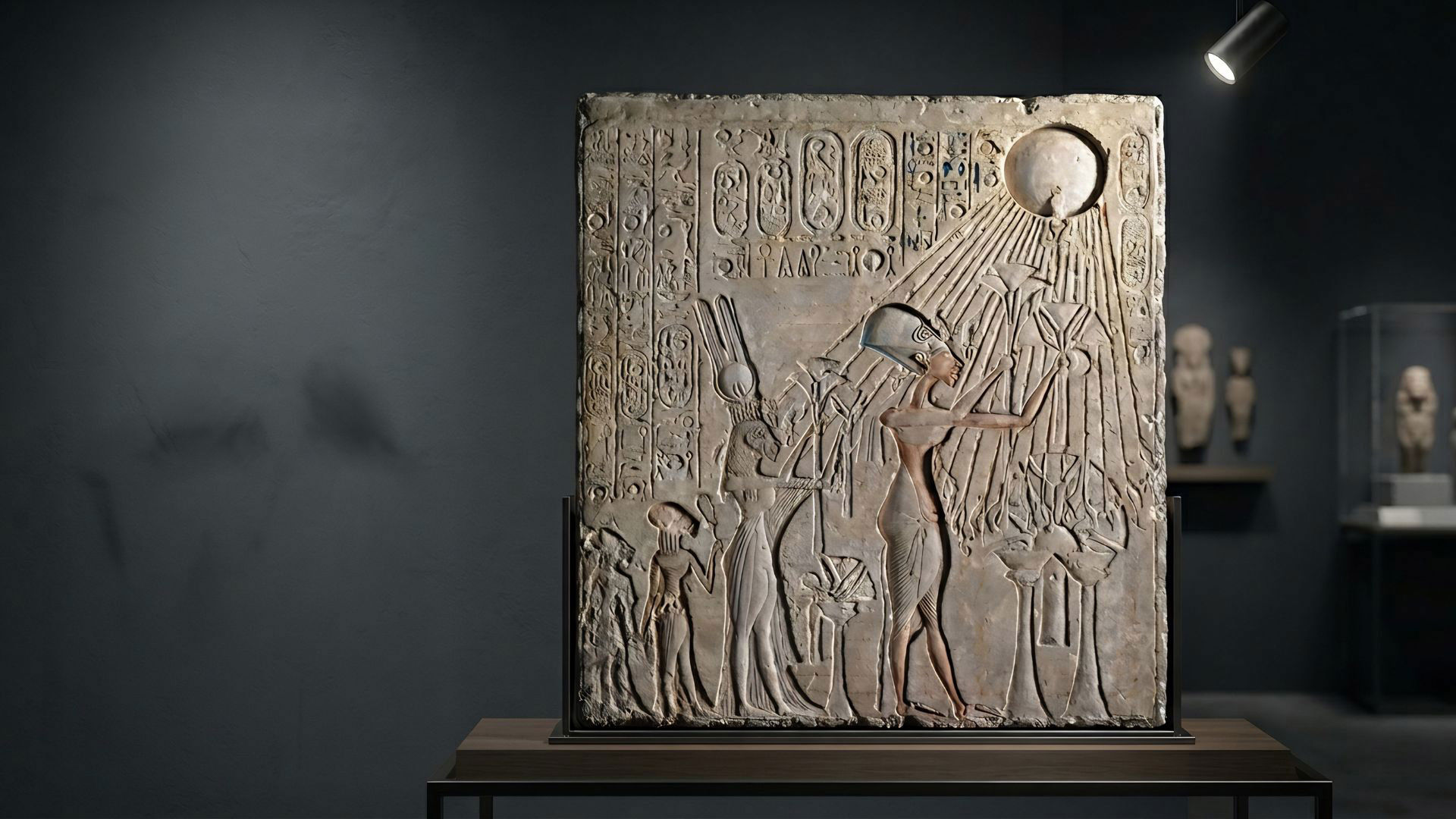


Treasures of the Pharaohs — Ancient Egypt Comes to Rome
One of the most significant cultural events in Rome right now, Treasures of the Pharaohs (Tesori dei Faraoni) brings together 130 extraordinary artifacts from the Egyptian Museum of Cairo and the Luxor Museum at the prestigious Scuderie del Quirinale. Running from October 24, 2025 through June 14, 2026 — extended from its original closing date due to record-breaking attendance — this is a rare opportunity to stand face-to-face with three thousand years of ancient Egyptian civilization.
For international visitors traveling to Rome in 2025 or 2026, this exhibition belongs at the top of your itinerary. Many of the objects on display have never before left Egypt, making this the only chance to see them outside their country of origin.
Why This Exhibition Matters
This is only the second time Egypt has authorized an exhibition of this scale and significance in Italy. The first was held at Venice's Palazzo Grassi in 2002–2003, and it featured 80 pieces. This Rome edition brings 130 masterworks — a testament to the deepening cultural ties between Italy and Egypt and a once-in-a-generation event for art lovers, history enthusiasts, and curious travelers alike.
Curated by Dr. Tarek El Awady, former director of the Egyptian Museum of Cairo and one of the world's leading Egyptologists, the exhibition traces the full arc of pharaonic civilization — from its earliest origins through the golden age of the New Kingdom and Third Intermediate Period, all the way to the most recent archaeological discoveries.
What You Will See
The exhibition unfolds across six thematic sections, each exploring a different dimension of ancient Egyptian society and belief.
The Treasures of the Pharaohs
The opening section focuses on divine kingship and the extraordinary wealth of Egypt's rulers. Among the highlights: the golden collar of Psusennes I, one of the most breathtaking pieces of ancient jewelry ever created, and the gilded throne of Sitamun, daughter of Amenhotep III — an intimate domestic object transformed into an eternal offering.
The People Around the Pharaohs
Statues, reliefs, and everyday objects tell the story of the complex social hierarchy that supported divine rule — from royal family members and high officials down to craftsmen and servants. The statue group of Mayor Sennefer with his wife Senetnay and daughter Mutnefret stands as one of the exhibition's most moving works, carved in black granite and radiating quiet dignity.
Religion and Beliefs
This section immerses visitors in the rituals and symbols that sustained pharaonic power for three millennia. It draws heavily on the tomb of Sennefer and explores the profound spirituality that bound ancient Egyptians to their gods and to the promise of eternal life. Monumental statues of Ramses VI and Thutmose III anchor the space visually and historically.
The Golden City
A dedicated section presents artifacts from the "Lost Golden City" of Amenhotep III, rediscovered in 2021 by renowned archaeologist Zahi Hawass. Seals, tools, and amulets recovered from this newly excavated site offer an unfiltered look at the daily lives of the craftsmen who built the glory of the pharaohs — and whose work combined technical mastery with deep religious meaning.
Death and the Afterlife
Painted sarcophagi, funerary reliefs, and ritual objects illuminate the ancient Egyptian understanding of death as transition rather than ending. The intricate craftsmanship on display here represents the absolute peak of pharaonic artistic achievement.
Egypt Meets Rome
The exhibition closes with the Mensa Isiaca, a remarkable bronze tablet from the 1st century BC decorated with copper, silver, and niello inlays. On exceptional loan from the Museo Egizio in Turin, it serves as a symbol of the ancient spiritual bond between Alexandria and Rome — and a fitting conclusion to a journey spanning thousands of years and two great civilizations.
Highlights at a Glance
- 130 masterworks from the Egyptian Museum of Cairo and the Luxor Museum
- Many pieces exhibited outside Egypt for the first time
- Statues of Sennefer, Ramses VI, and Thutmose III
- The golden collar and funerary treasures of Pharaoh Psusennes I
- The gilded throne of Princess Sitamun
- Artifacts from the newly discovered Golden City of Amenhotep III
- The Mensa Isiaca, on loan from the Museo Egizio of Turin
- Audio guides narrated by Zahi Hawass and Roberto Giacobbo
- Multilingual explanatory panels throughout
- Educational workshops for children and families (December 25, 2025 – January 6, 2026)
Practical Information
Dates and Hours
The exhibition runs from October 24, 2025 to June 14, 2026, and is open every day of the week. Monday through Friday, doors open at 10:00 AM with last entry at 7:00 PM (closing at 8:00 PM). On Saturdays, Sundays, and public holidays, the venue opens one hour earlier at 9:00 AM. Plan on spending between 90 minutes and two hours inside, though devoted visitors often stay longer.
Venue
The exhibition takes place at the Scuderie del Quirinale, one of Rome's most prestigious exhibition spaces, originally built in 1722 as royal stables and transformed into a museum venue in 1999 by architect Gae Aulenti.
Via Ventiquattro Maggio 16, 00187 Rome, ItalyTickets and Booking
Advance booking is strongly recommended, especially on weekends and public holidays. Due to the exhibition's extraordinary success, the Scuderie del Quirinale does not guarantee admission on Saturdays, Sundays, and holidays without a prior reservation. You can purchase standard tickets, open-date tickets, guided tours, and family workshops directly through the official ticketing platform.
Groups and school parties must book in advance by writing to gruppi@scuderiequirinale.it or calling the VivaTicket group booking line at +39 02 928 977 22.
Getting There
The Scuderie del Quirinale sit in the heart of Rome, a short walk from the Trevi Fountain and Palazzo del Quirinale. Several bus lines stop nearby, including routes 40, 60, 64, 70, 117, 170, and H, with stops along Via Nazionale, Via Tritone, and Piazza Venezia. If you prefer the metro, take Line A to either Barberini or Repubblica, both about 12–13 minutes on foot from the venue.
Note that the Scuderie fall within Rome's ZTL restricted traffic zone. If you plan to drive, arriving by car is possible but requires careful planning. Several paid parking garages operate nearby, and pre-booking a spot in advance can save both time and money.
About the Exhibition
The exhibition is organized by ALES – Arte Lavoro e Servizi (under the Italian Ministry of Culture) and MondoMostre, in partnership with Egypt's Supreme Council of Antiquities. The Italian Ministry of Foreign Affairs and the Egyptian Ministry of Tourism and Antiquities both lend their support. Main sponsors include Intesa Sanpaolo and ENI. The official catalog, curated by Zahi Hawass and published by Allemandi Editore, is available for purchase online.
Photo credits: Turismo Roma